

Bedroom shelving ideas: practical, stylish storage that elevates your space
- mybettershelf
- Jan 8
- 5 min read

A bedroom is rarely just for sleeping - it’s where we get dressed, read, sometimes even work. That’s why smart storage is essential - and this is where shelves shine. The right shelving lets you store and style at the same time: books, plants, and décor become part of the interior, not hidden away.
So which shelf type is best for the bedroom? Below you’ll find the three core options (plus a +1 special), with bedroom-specific pros and cons, layout tips, and styling advice to make the most of your bedroom shelving ideas.

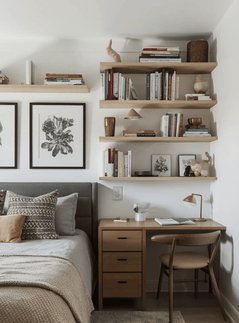
Wooden shelf and nightstand combo
The three essential bedroom shelving solutions
The same shelving families that work in living rooms and hallways work beautifully in bedrooms, too. Each has its strengths - your choice depends on space, style, and how flexible you want the setup to be.
1) Built-in shelves and cabinet shelving
Built-ins are fixed, permanent solutions, typically planned during design or larger renovations. From an interior design perspective, they’re the most elegant and visually calm option because they sit flush with the wall and the room’s architecture - clean lines, no elements poking into the space.
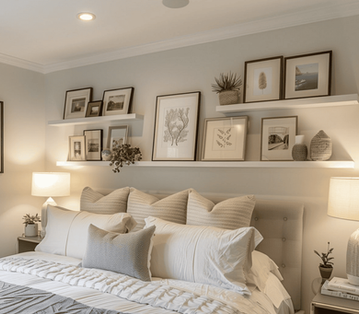
A popular example: shelves at the headboard wallCreating niches or a full wall of shelving around the bed instantly frames the headboard and sets a focal point. It’s not only striking but highly practical: keep books, an alarm clock, your phone, or favorite objects within easy reach.
This is especially effective in smaller rooms where there’s no space for bedside tables on both sides. Built-ins visually optimize the footprint while delivering a unified, modern look.
Pros
Custom, made-to-measure fit
Maximizes every inch of available space
Premium “built-in” aesthetic
Cons
Hard to reconfigure or remove later
Usually higher cost to execute
Less flexible—any change requires real work
Styling tip: Use rhythm: book - décor - negative space - plant. Leave breathing room - visual noise is tiring in a bedroom. Aim for 60-70% shelf fill at most.
2) Freestanding shelving units
Freestanding shelves are open, standalone pieces you can place anywhere: classic bookcases, ladder shelves, or favorites like IKEA’s Billy and Kallax ranges.
They’re great for zoning a multifunctional bedroom. A shelf in a corner can anchor a reading nook; a plant shelf by the window adds a fresh, natural mood. Open bookcases and cubed units are easy to rearrange seasonally or when you move. Slim, open frames keep the room feeling light while offering plenty of display surface for photos, magazines, and objects.
Pros
Easy to move and re-position
Ready to use - no installation needed
Huge variety of styles and sizes
Cons
Occupies floor area
Won’t sit as “seamlessly” as built-ins or wall shelves
Should be stabilized/anchored to prevent tipping (especially with kids)
Styling tip: Think in blocks. Mix vertical and horizontal book stacks; add a taller vase and a plant. The eye reads coherent groupings, not chaos.
3) Wall shelves - the most versatile choice
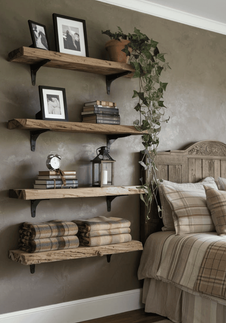
Wall shelves mount directly to the wall, so they take zero floor space. You can vary size, number, and placement endlessly - making them one of the most flexible storage ideas for bedrooms. Floating shelves are especially effective: they look light, keep the floor clear (easier cleaning, room feels larger), and scale up or down as needed.
mybettershelf floating shelves use concealed brackets for an elegant, minimalist finish. They’re not just beautiful - installed correctly, a shelf can carry 30-40 kg with the right fixings.
Why so many people choose floating shelves
Modern, sleek look: no visible hardware - shelves appear to float.
Fully customizable layout: mount at any height, symmetrical or staggered.
Space-saving: ideal for small bedrooms where bulky furniture won’t fit.
Easy maintenance: clear floor = faster cleaning.
Layout ideas for wall shelves
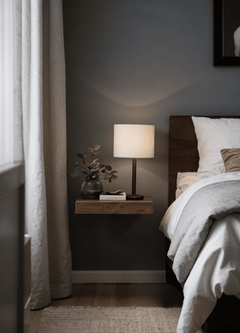
Nightstand alternative: In tight spots beside the bed, one floating shelf holds your phone, a book, a small lamp, and a water glass.
As a bookcase: Create a “book wall” with multiple shelves in a step pattern.
Plant ledges: Stagger shelves at different heights for small and medium pots to bring in greenery.
Display rails: Showcase framed photos, art objects, candles, or travel mementos.
Pro tip for mounting: Bedrooms often have drywall (plasterboard). Use heavy-duty drywall anchors and calculate load carefully. Books are heavy: one linear meter can weigh 15-20 kg.
+1 special: floating shelf with drawer = two-in-one
mybettershelf floating nightstands combine hidden storage with a clean, open top. The drawer swallows everything you don’t want on display - chargers, glasses, papers - while the surface keeps daily essentials and décor at hand.
Why it’s perfect for bedrooms
Within arm’s reach: Access from the bed without visual clutter.
Dual function: Open display + discreet storage in one.
Minimalist aesthetic: Clean lines that suit most interior styles.
Easy to pair: Combine with additional floating shelves or a wall-mounted desk - ideal as a vanity or compact home-office station.
For a cohesive look, choose shelves and nightstands from the same series so wood tones, finishes, and proportions align beautifully.









How to choose shelves for your bedroom
Consider the following before you buy:
How much space do you have? Small room? Go wall-mounted - no floor footprint, lots of capacity.
What’s the primary purpose? For mostly books, pick a bookcase or built-ins. For décor + daily grab-and-go items, floating shelves are perfect.
What’s your style? Floating shelves suit modern, minimalist, or Scandinavian schemes. Built-ins love classic and tailored spaces. Freestanding pieces are great for rustic or eclectic looks.
How much flexibility do you need? If you’ll move or rearrange soon, choose wall shelves or freestanding units over fixed built-ins.
Sizing, materials, and sustainability - the pro checklist
Sizing
Height: As a nightstand, align the shelf top roughly with mattress height (~45-55 cm). Read about how to pair your nightstand with your bed.
Depth: 15-18 cm for décor; 20-25 cm for books
Spacing: Leave 25-35 cm vertical clearance for mixed décor; 28-32 cm is comfortable for most books.
Materials & finishes
Solid wood is warm, durable, and repairable; light oak or ash keeps the room airy.
Veneer is a good choice if you want the look of solid wood, but the surface area or quantity is too large, which would make the project very expensive.
Color: Match the wall tone to “blend in,” or choose a contrasting color for character - pick what serves the mood you want.
Sustainability
At mybettershelf we follow a less but better philosophy: durable, repairable pieces made responsibly. A well-planned floating shelf composition can stay with you for years and refresh easily with restyling - this is the heart of bedroom shelving ideas: not disposable décor, but a flexible system.
Summary
Bedroom shelves don’t just store—they tell your story. Built-ins deliver a premium, tailored look; freestanding units are easy to move and re-zone; and wall shelves - especially floating shelves - offer the lightest, most versatile solution. Add a floating shelf with drawer for clutter-free calm and everyday convenience.
When function (reach, load) and aesthetics (proportions, color, rhythm) work together, your bedroom shelving ideas create a restful, personal, and truly compromise-free space.
Get more interior design tips by subscribing to our newsletter - so you can get every new content dispatched right to your inbox.
Photo: Pinterest, Hearthandpetal, Lovely harbor, Maggie Meadow, Toolzview, Rhythmofthehome, Utterlyhome, Inauguralhomes, Fabricerie, Charmydecor, Dailyhomesafety, Happyhomehour, Expromt


