

How to style a coffee table - professional tips for minimalist, bohemian, and japandi styles
- mybettershelf
- Nov 13, 2025
- 5 min read
Updated: Dec 8, 2025
A well-decorated coffee table is the centerpiece of your living room. Whether you prefer minimalist, bohemian, or japandi style, decorating your coffee table helps make your space more homely and unique – while remaining practical and eye-catching. This step-by-step guide will show you how to create the perfect design and introduce you to the basics of the 'triangle method'.
Principles you need to know before you start decorating
1) Triangle Method
Professionals often build from three "visual points": a higher focal point (e.g., a vase), a medium-height element (e.g., candles), and a lower layer (e.g., a stack of books). This trio provides balance—especially on a round table—and can be easily varied seasonally. The method is related to the principles of thirds and odd numbers (3–5–7), which helps with grouping objects and creating rhythm.
2) Layering & heights
Play with objects of different heights and textures (books, ceramics, wood, glass), but leave some negative space so that the table remains usable: there should be room at least for a coffee cup and the remote control. Varying heights and mixing materials help to create a modern effect.
3) Tray = order and focus
A low-rimmed tray visually brings together small items (candle + matches + air freshener) and can be removed in one go when cleaning.
4) Colors & color scale
Work with 2-3 shades from your living room's color palette; don't clutter a small table with lots of mini items – fewer, larger pieces are a better choice.



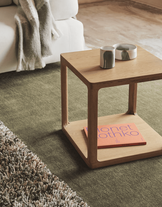


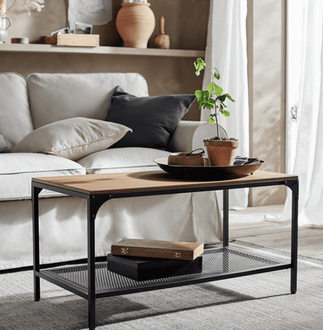
Minimalist coffee table decor – "less is more"
Visuals: clean lines, neutral tones, few, well-chosen objects.
Recipe (for a rectangular table):
● High point: a slender vase with a single branch or flower
● Middle: 2-3 coffee table books in neutral colors; a small stone/ceramic object can be placed on top
● Low: flat tray with a candle and small tongs/matches
Tips:
● Keep the number of decorative items between 3 and 5; if there are two stacks of books, one should be lower, and the other can hold the design object.
● Material mix: stone + wood + glass; alternating glossy and matte surfaces.
● Leave half of the table empty – this creates space and a premium feel.
This approach will help you avoid an “overstyled” look; minimalist examples also emphasize this: the key is function + simplicity + a few statement pieces.
For round tables: the triangle method is particularly effective – imagine three “islands” that open up towards the edge of the circle, leaving space in the middle.
Bohemian coffee table decor – layers, textures, stories
The bohemian style is all about an eclectic mix: handmade objects, vintage pieces, soft textiles, a variety of patterns, and travel souvenirs – arranged in a harmonious way.
Recipe (for a large, square table):
● High point: lush greenery (e.g., eucalyptus) in a wide-necked, handmade vase
● Middle: carved wooden sculpture or handmade ceramics + vintage candlestick
● Low: textile runner or rattan tray with small shells/travel items; next to it a small pile of books
Tips:
● Layer textures (rattan, linen, raw wood, glazed ceramics).
● Use odd numbers (3–5–7) of items to keep the eclectic look organized.
● Broken colors, earth tones + 1 bright accent (e.g., turquoise candle).
Inspiration and proven rules: layering, mixing greens and handmade pieces, grouping in threes.
Japandi coffee table decor - the Asian-European aesthetics
If you are looking for a natural, clean look, the Japandi approach (Japanese minimalism + Scandinavian functionalism) is the perfect basis. The coffee table here is not a "showpiece" but a quiet focal point.
Use the principles of ikebana (the Japanese art of flower arranging): conscious composition, where lines, negative space, proportions, and seasonal plant material take center stage.
Recipe (for an oval/wooden table):
● High point: ikebana-style, asymmetrical composition pinned into a Kenzan needle cushion (e.g., 1–2 green branches + 1 seasonal flower)
● Middle: natural stone/wooden sculpture or matte ceramic cup
● Low: thin tray for tea ceremony (matcha set/teapot)
Tips:
● Materials: solid wood, stone, bamboo, matte ceramic, glass.
● Palette: neutral, earth tones, lots of natural textures.
● The arrangement should be functional, and there should always be free space – this is the essence of Japandi.
The Japandi/ikebana approach emphasizes natural materials and quiet proportions; avoid clutter, play with few but distinctive elements.
How to style a coffee table, step by step
Clear the table. Start with a blank canvas.
Choose a focal point. Vase/object/candle – this will be the apex of the triangle.
Layer with books. Two or three larger albums will unify the composition and provide a platform for smaller objects.
Add greenery. A single branch, mini ikebana, or tiny bonsai brings life to the space.
Use a tray. This is where the "messy little things" (matches, coasters, essential oils) live.
Follow the rule of 3-5-7 and play with height. This creates rhythm, not chaos.
Leave some empty space. Even a well-styled table has room for coffee—this is what gives it a truly luxurious feel.
Common mistakes and quick fixes
● Too many small items. Replace them with three larger ones + a tray.
● Uniform heights. Add a tall vase or raise one of the items with a stack of books.
● Color overload. Limit yourself to two or three shades that suit your living room.
Some additional ideas
If you enjoyed decorating and would like to continue in your bedroom, click here for more ideas on how to decorate your bedside table!
Final word
Whether your heart is set on minimalist, bohemian, or Japandi, the triangle method + layering + negative space trio works for every style. Start with three items, fine-tune the heights, and let your coffee table be the "lightly arranged" centerpiece of your living room. If you want to delve deeper into the subject, read our related articles.
Get more interior design tips by subscribing to our newsletter - so you can get every new content dispatched right to your inbox.
Photo: Pinterest, Gatherhouse, Haus und Garten Trends, Desenio, Decor Trick, Inspirations Times, Sostrene Grene, Kave Home, Home made graceful, Ikea, Quiet minimal, Anthropologie, Skandic